4th SPANISH HPC COMBUSTION WORKSHOP

RED ESPAÑOLA DE SUPERCOMPUTACIÓN

September 29th, 2023
Barcelona Supercomputing Center (BSC)
Department of Computer Applications in Science and Engineering (CASE)

About The Event

The HPCCOMB2023 combustion workshop is dedicated to getting together combustion re-searchers across Spain, and share experiences and issues related to the modelling of combus-tion systems. In particular, the workshop has the following objectives:


· To disseminate information about the use of supercomputing facilities for combustion applications at the national level,
· To encourage the use of computing resources from the RES in the community,
· To share successful / unsuccessful experiences on combustion modeling,
· To enable national collaborations for national and EU projects,
· To disseminate high-level research to invited industries.


This community has large legacy, is very active on research and has a strong link with the industry and energy sectors, but still, it is not a large consumer of HPC resources at the national level. Many researchers access to computing power via local clusters, international collaborations, PRACE or are simply not aware of the RES. We would like to take the opportunity to present the capabilities of Marenostrum 4 and the available information about Marenostrum 5, show the new updates of the RES (larger number of resources at disposal for researchers compared to two years ago), the storage application and all the services available from the RES that can be used by the combustion community.

The opening this year will be given by Professor Mario Sánchez-Sanz, from the Universidad Carlos III de Madrid (Spain) and we have the honor to have two plenary speakers, Professor Aimee Morgans, from Imperial College (UK) and Assistant Professor Ivan Langella, from Delft University of Technology (the Netherlands). 

Contributions to the workshop are invited in all areas of numerical combustion. Contributed presentations (15 minutes talk followed by 5 minutes discussion) should be submitted as abstracts (max 500 words). From the full list of abstracts, about 112 contributions will be selected for oral presentation, while the rest will be allocated as 3-5 minute “flash talks”.

Please send your abstracts to daniel.mira@bsc.es or carmen.jimenez@ciemat.es before the 31st July 2023.

Please note that registration is also necessary. The link to register is given here:

https://casedissemination.typeform.com/to/xgaD0hbX



Keynotes Speakers

Mario Sánchez-Sanz
Universidad Carlos III de Madrid (Spain)
Aimee Morgans
Imperial College (UK)
csm__FAU2536_9085532f17 - Editada
Ivan Langella
Delft University of Technology (The Netherlands)

Short Bio

Mario Sánchez-Sanz

Universidad Carlos III de Madrid (Spain)

Mario Sánchez Sanz obtained his degree in Mechanical Engineering at the Universidad Carlos III de Madrid in 2002. He joined the PhD program of this university, obtaining his doctorate in May 2007 in the Mathematical Engineering program under the supervision of prof. Antonio Sanchez and prof. Amable Liñán. During his PhD, Mario stayed in the Center of Energy Research of the University of California at San Diego in the group of prof. Forman Williams, and the Mathematics Department of the University of East Anglia led by prof. Mark Blyth and prof. Norman Riley. After his graduation in May 2007, he moved to the School of Aeronautics of the Polytechnic University of Madrid with a postdoctoral fellowship «Juan de la Cierva» and got a position as an assistant professor until 2011. He got the «Jose Castillejo» postdoctoral fellowship (2008 and 2010) and started collaborations a research collaboration with prof. Mich Smooke (Yale University) and prof. Carlos Fernández-Pello (University of California at Berkeley. In 2011, he started at the Fluid Mechanics Department of the University Carlos III and in 2021, he was appointed as full professor of Fluid Mechanics.

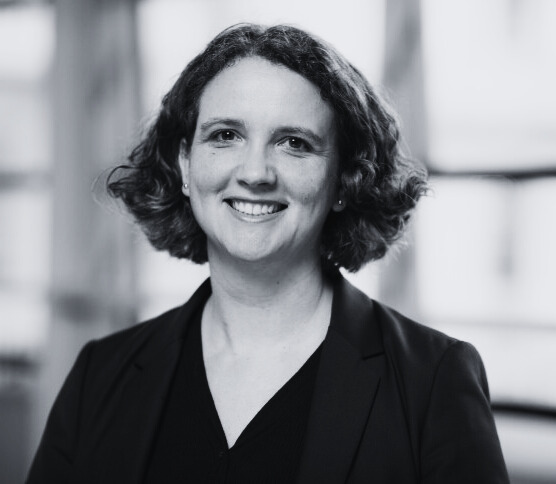
Aimee Morgans’ research on sound and fluid dynamics is aimed at making energy generation and transport more environmentally friendly, and on mitigating the effect of climate ex-tremes. She currently holds a €2M ERC Consolidator Grant (2018-23) on how sound and flow interact in low emissions combustors, and previously held a €1.5M ERC Starting Grant (2013-18) and a Royal Academy of Engineering Research Fellowship (2004-09) on thermoacoustic instabili-ties. Aimee Morgans joined Imperial as a Lecturer in 2007, becoming Senior Lecturer in 2011, Reader in 2014 and Professor in 2017. She was elected to Fellowship of the Royal Academy of Engineering in 2021. She has PhD, MEng and MA degrees in Engineering, all from Cambridge University. She is course leader and lecturer for the 3rd year undergraduate Fluid Mechanics course. She co-leads the department Equality and Diversity Committee, which achieved an Athena SWAN Bronze Award in 2019. She is a member of the Management and Research Committees for Imperial’s Centre for Doctoral Training in Fluid Dynamics.

Aimee Morgans

Imperial College (UK)

Ivan Langella

Delft University of Technology (The Netherlands)

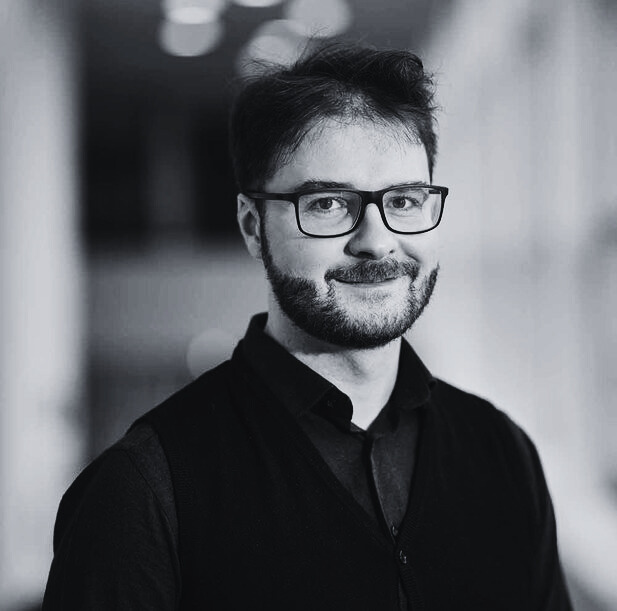
Dr. Ivan Langella is an Assistant Professor in Sustainable Aircraft Propulsion at the faculty of Aerospace Engineering at TU Delft. He obtained his Master degree in Aerospace Engineering from the University Federico II of Naples, Italy, in 2011, and his PhD in Mechanical Engineering from University of Cambridge, UK, in 2016, after a research period spent at Yale University. Since then, he has worked as a postdoctoral associate at the University of Cambridge until June 2018 on advanced combustion systems of aeronautical interests in collaboration with Rolls-Royce and DLR Germany. From June 2018 to April 2020 he has worked as Lecturer in Thermofluids science and Engineering at Loughborough University, UK, before joining the research group in Delft. Dr Ivan Langella has been a non-stipendiary fellow of the Robinson College in Cambridge from 2016 to 2018 and a member of the Rolls-Royce UTC in Combustion System and Aerothermal Processes from 2012 to 2020. He is currently a member of the Combustion Institute, the American Society of Mechanical Engineering, the Dutch Association for Flame Research (NVV), and a fellow of the Higher Education Academy.

Agenda

Abstracts

Theoretical and experimental analysis of flames propagating in slender channels

Authors: Mario Sánchez-Sanz

Institution: Universidad Carlos III de Madrid (Spain)

Abstract: The development of new technology, much of it within the renewable energy industry, intro-duces new problems and geometrical configurations that push the knowledge of fire science and technology. Newly-developed car engines, for example, combine 300-400 elementary fuel cells into the fuel cell stack that consists of an assembly of fuel and oxygen (air) feed lines, ex-haust pipeline, electric cables and supporting devices. They are all protected by a metal jacket, which leaves an air-filled gap between the stack and the jacket. The leak of fuel from the ele-mentary fuel cells or gas feed line may lead to formation of fuel-air mixture in the gap that, in presence of energy source, may induce the formation of a propagating flame. This problem motivates the study of premixed flames propagating in a slender combustion chamber that mimics the configuration found in fuel cells. Different fuel-air mixtures are ignited at one end of the combustion chamber to analyze the propagation of the flame towards the other end. The present talk will summarize recent experimental and theoretical findings concerning these phe-nomena, in which the balance between heat losses and heat release plays a central role in the dynamic behaviour of the flame. Specific attention will be given to hydrogen-air mixtures, in which the high mass diffusivity of hydrogen fuel introduces a differentiating factor that leads to the formation of unique propagation regimes. A combination of theoretical, numerical and experimental evidence will show that hydrogen-air flames can propagate in sub-millimetric gaps by breaking the reaction front into isolated flame cells that travel steadily in straight lines or split to perform a fractal-like propagation that resembles the pathway of starving fungi or bacteria. Much more research is needed to understand the intriguing propagation of flames in narrow gaps that will be reviewed during this talk.

Simulating dancing flames for thermoacoustic instability

Authors: Aimee Morgans

Institution: Imperial College (UK)

Abstract: Flames “dance” in response to sound. When perturbed by acoustic waves, their flame fronts move, and their heat release rate becomes unsteady. Unsteady heat release rate then gener-ates acoustic waves, which reflect from boundaries and return to further excite the flame. Un-der some conditions, the background unsteadiness in a combustor can combine with this posi-tive feedback cycle to cause successively increasing oscillation amplitudes – a thermoacoustic instability. This phenomenon can cause catastrophic vibrational damage to the combustor and attached components and needs to be avoided. Nearly all combustion chambers can exhibit thermoacoustic instability: low emissions gas turbines and rocket engines are especially suscep-tible. Being able to computationally predict thermoacoustic instability for a design on paper, and design it out ahead of build, is the ultimate goal. There is a large disparity in the length scales relevant to the two key phenomena at play. The unsteady response of turbulent flames is governed by chemical reactions and wrinkling happening at very small scales (less than a mil-limetre), while the acoustic waves have wavelengths which are very long (of order metres) at the low frequencies where instabilities typically occur. This means that multi-scale methods are needed to achieve accurate computational predictions with reasonable computational expense. These typically combine simplified computational treatment, based upon linear wave models, for the acoustic waves and reacting flow Large Eddy Simulations (LES) for the flame. This talk will describe this multi-scale approach, with a focus on the simulations of flame unsteadiness. We will show how this has led to predictive successes for some quite complicated combustors, and will discuss the outlook for future carbon-free fuels.

Highly strained hydrogen flames: challenges and perspectives

Authors: Ivan Langella

Institution: Delft University of Technology (the Netherlands) 

Abstract: Hydrogen is a promising energy carrier for addressing the climate emergency and replacing kerosene in both power and transportation sectors due to its high low-heating value, zero-carbon emissions and possibility to produce it cleanly via electrolysis using renewable energies. The direct combustion of hydrogen introduces, however, further challenges as compared to carbon-based fuels due to its strong reactivity and diffusivity, that make its flame prone to thermo-diffusive instabilities and flashback. Moreover, hydrogen flame high adiabatic tempera-ture implies significant production of toxic nitric oxides (NOx). The development of green, new-generation engines requires solutions where the hydrogen flame is stable and with ultra-low NOx emissions for any power setting. One peculiar and relatively unexplored property that distinguishes hydrogen from the other flames is its behaviour under intensive strain in pre-mixed conditions. The coupling between differential diffusion and strain results in fact in an increase of flame reactivity, allowing the flame to exist far beyond the typical extinction values of hydrocarbon flames. Recent research further shows that, simultaneously, NOx is suppressed at high strain levels. In this talk typical challenges for hydrogen-fuelled combustion systems and perspectives will be discussed first, along with state-of-the-art methodologies to predict the reacting flow field behaviour via computational fluid dynamics. The talk will continue then by presenting recent findings of hydrogen flames at high strain, and discussing how highly strained hydrogen flames could be used in modern combustion devices.

Location

Barcelona Supercomputing Center

Address: Calle Jordi Girona 31, 08034 Barcelona

Workshop room: Rectorado Building, Sala de Juntas, 1st floor