5th SPANISH HPC COMBUSTION WORKSHOP

RED ESPAÑOLA DE SUPERCOMPUTACIÓN

September 26th, 2025

Barcelona Supercomputing Center (BSC)
Department of Computer Applications in Science and Engineering (CASE)

About The Event

The HPCCOMB combustion workshop is dedicated to getting together combustion researchers across Spain, and share experiences and issues related to the modelling of combustion systems. In particular, the workshop has the following objectives:

· To disseminate information about the use of supercomputing facilities for combustion applications at the national level,
· To encourage the use of computing resources from the RES in the community,
· To share successful / unsuccessful experiences on combustion modeling,
· To enable national collaborations for national and EU projects,
· To disseminate high-level research to invited industries.

This community has large legacy, is very active on research and has a strong link with the industry and energy sectors, but still, it is not a large consumer of HPC resources at the national level. Many researchers access to computing power via local clusters, international collaborations, PRACE or are simply not aware of the RES. We would like to take the opportunity to present the capabilities of Marenostrum 5, show the new updates of the RES, the storage application and all the services available from the RES that can be used by the combustion community.

The opening talk this year will be delivered by Miriam Reyes Serrano from the University of Valladolid. We are also honored to host two plenary speakers: Axel Vincent (ONERA) and Arne Scholtissek (Technical University of Darmstadt). The workshop will feature three technical sessions of one hour each, with a total of nine technical talks (15-minute presentation + 5-minute Q&A), in addition to the plenary lectures. Flash talks and networking opportunities will also be part of the program. 

Call for Contributions

We invite senior researchers, professionals from industry, PhD students, and postdoctoral researchers, with the goal of fostering a broad and inclusive environment for sharing research, networking, and exploring potential collaborations within the national scientific community.

The event will include technical sessions featuring selected 15-minute presentations (plus 5 minutes for questions), as well as a Flash Talk section with short presentations of 3–5 minutes, allowing all participants the opportunity to present their work.

To participate, please submit an abstract of up to 500 words. A total of 9 abstracts will be selected for the technical sessions, and the rest will be included in the Flash Talks.

The submission deadline is Sunday, August 31st, 2025. Abstracts should be sent to: daniel.mira@bsc.es and carmen.jimenez@ciemat.es

REGISTRATION

To attend the event, registration is required. You can find the registration link here: https://form.typeform.com/to/WLgbz18f
 

Keynotes Speakers

Miriam Reyes Serrano
University of Valladolid (Spain)
Axel Vincent-Randonnier
ONERA (France)
Arne Scholtissek_web
Arne Scholtissek
Technical University of Darmstadt (Germany)

Short Bio

Miriam Reyes Serrano

University of Valladolid (Spain)

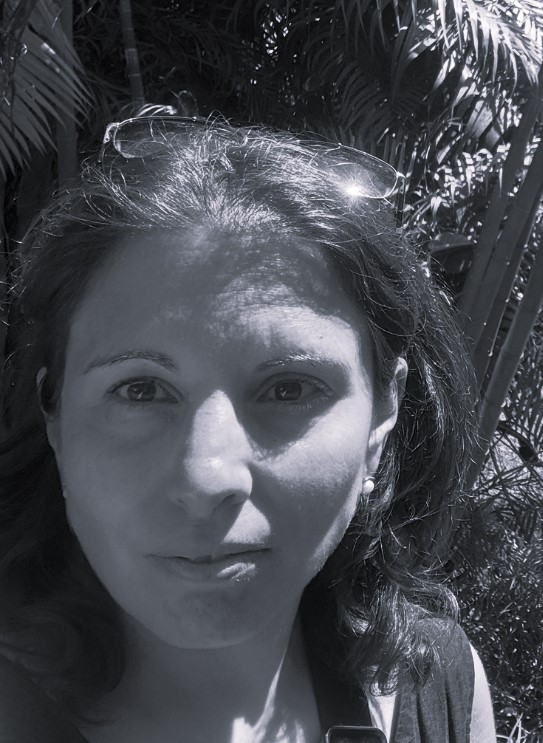
Dr. Reyes was awarded her PhD in 2008 by the University of Valladolid, and now is Associate Professor of thermal engines in the Department of Energy and Fluid-mechanics engineering of the University of Valladolid. Dr. Reyes has participated in teaching university courses in subjects of energy, engines, combustion, alternative fuels and hydrogen, in several Grades in Mechanical and Industrial Engineering and Master of Industrial Engineering. Dr. Reyes has developed her research in the research group of Thermal Engines and Renewable Energies (MYER) and the main research lines are the optical characterization of the combustion process in constant volume combustion bombs by studying chemiluminescence and flame visualization, and the study of alternative fuels in combustion processes, such in internal combustion engines as in constant volume combustion bombs. As a result, Dr. Reyes is author of many scientific papers and principal researcher of projects and contracts related to energy conversion and thermal engines. She has supervised three PhD Thesis, and more than fifty final projects in Master and Bachelor degrees.

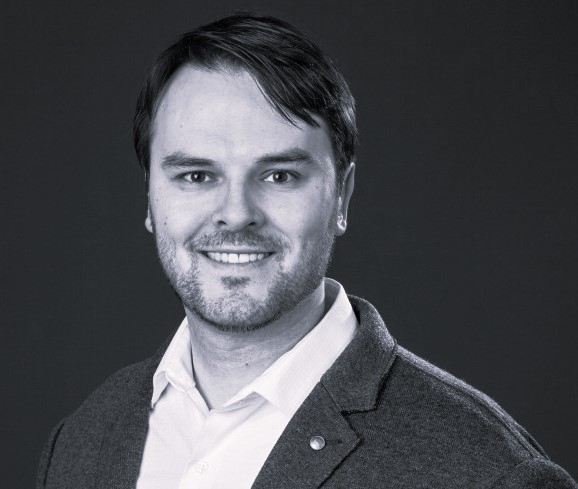
Axel Vincent-Randonnier obtained a PhD on plasma processing of car exhausts from Pierre & Marie Curie University, in Paris, in 2001. He entered at ONERA, the French Aerospace Lab as postdoctoral researcher in Energetics Department, working on plasma assisted combustion experiments.
From 2006 to 2022, he worked on experimental supersonic combustion at LAERTE facility (ONERA Palaiseau Center), including investigations on plasma assistance. His activities on large test facilities extended to subsonic combustion for fundamental investigations (2007 – LAERTE subsonic facility) or industrial applications to turbomachines. From 2012 to 2019, he managed the MICADO project to develop a new test facility to investigate high pressure and high temperature air-breathing combustion in turbomachinery. He led experiments at MICADO facility up to 2022-2023 when he moved to Toulouse and Fauga-Mauzac centers, joining the LACOM team (combustion facility dedicated to spraying and instability studies).
Since 2024, he also works with ONERA’s Optics Department at Feelings Ground Station to establish and investigate high-data rate laser-based communication with geostationary satellites.
He authored or co-authored tens of articles one book chapter and one patent (low NOx hydrogen injector).

Axel Vincent-Randonnier

ONERA (France)

Arne Scholtissek

Technical University of Darmstadt (Germany)

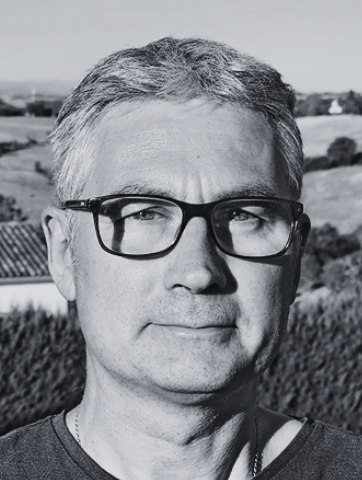
Dr. Arne Scholtissek serves as Senior Academic Councillor and Research Group Leader at the Institute for Simulation of reactive Thermo-Fluid Systems (STFS) at TU Darmstadt, Germany. He earned his PhD in Mechanical Engineering from TU Darmstadt in 2018 for his research on flamelet modeling in composition space for combustion applications. Dr. Scholtissek’s research interests span from foundational theoretical developments and numerical methods to novel applications in hydrogen and metal fuel combustion. As an «Athene Young Investigator» at TU Darmstadt, he has secured multiple prestigious research grants as Principal Investigator, including projects funded by the German Research Foundation (DFG) and European initiatives. So far, he has authored over 70 peer-reviewed journal publications, maintains active international collaborations, and currently supervises multiple PhD students in his research on advanced flamelet theory and clean combustion technologies.

Agenda

Abstracts

Study and characterization of the combustion process of fuels with low or zero carbon content for the reduction of CO2 emissions

Authors: Miriam Reyes Serrano​

Institution: University of Valladolid (Spain)​

Abstract: The main objective of this work is the characterization of the combustion process of fuels with low or zero carbon content (for example hydrogen and methane), for the progressive substitution of fossil fuels derived from petroleum used in thermal engines and to decrease the greenhouse and pollutant emissions. To carry out this objective, in this work is presented a study of the combustion process of hydrogen/methane mixtures, in different proportions, as a fuel, using three different methodologies: optical techniques, which includes chemiluminescence and visualization with Schlieren technique, conventional techniques, by analyzing pressure register (in chamber), and modeling techniques with diagnosis and kinetic models, applied to combustion chambers with different geometries (spherical and cylindrical). Experiments were performed in two constant volume combustion bombs with different geometry: a spherical combustion chamber instrumented for the study of chemiluminescence emissions and pressure register, and a cylindrical combustion bomb, instrumented to visualize the flame front development with the Schlieren technique. Results of burning velocity, heat release rate, OH and CH chemiluminescence emissions, and flame front morphology characterized by the inherent instabilities generated during flame propagation, are presented, based on the application of instability theory to determine the influence of fuel mixtures on the origin and development of flame front instabilities and intrinsic effects, such as thermal-diffusive and hydrodynamic effects.

Air-breathing combustion experiments at ONERA

Authors: Axel Vincent-Randonnier​

Institution: ONERA (France)

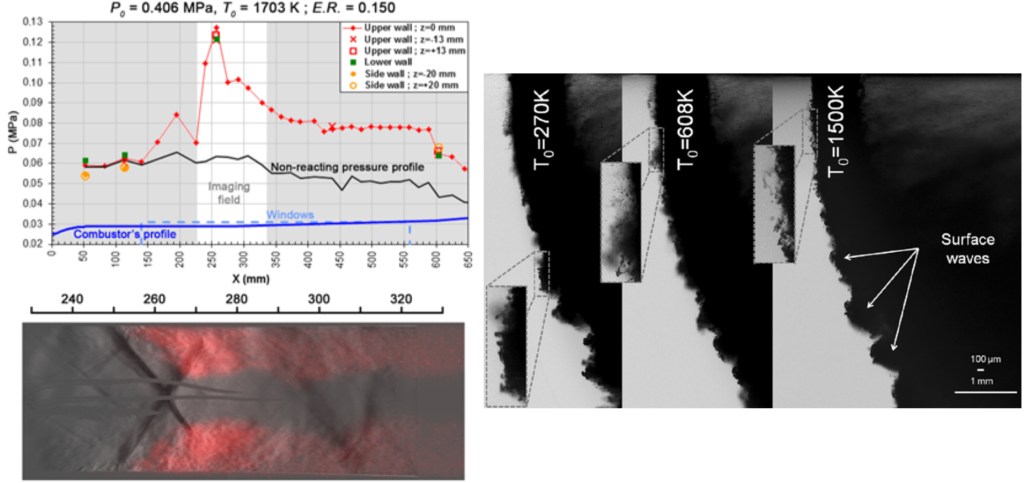
Abstract: As combustion behavior is highly dependent on test conditions, relevant testing needs to be achieved in conditions close to applications in terms of pressure, temperature and flow rate. The current presentation will then focus on experimental investigations with large test facilities and advanced diagnostics applied to subsonic or supersonic combustion for both fundamentals and application to turbomachines or scramjet/dual mode ramjet propulsion. Both kerosene or hydrogen fuel will be considered. Experiments on combustion instabilities with flashback will also be presented, as well as the design a stable low-NOx hydrogen injector.

Supersonic combustion of hydrogen (left) and kerosene jet injection in a supersonic crossflow of air (right).

Advancements in flamelet theory: from classical flamelet to 2D composition space formulations for multiregime combustion and the construction of high-dimensional manifolds

Authors: Arne Scholtissek​

Institution: Technical University of Darmstadt (Germany)​

Abstract: The presentation is concerned with advancements in flamelet theory, from traditional one-dimensional approaches to handle complex multi-regime combustion through 2D composition space formulations. In this context, an important aspect is the development of self-contained composition space solution methods that eliminate the dependence on external gradient information. By solving equations for mixture fraction and progress variable gradients directly within composition space, truly self-consistent flamelet solutions are achieved. Building on this framework, two-dimensional flamelet equations using orthogonal coordinates in composition space have been derived and solved. The approach enables a systematic treatment of partially premixed and multi-regime combustion phenomena within a unified flamelet approach, allowing the construction of advanced flamelet-based manifolds across multiple controlling parameters. After discussing the ongoing developments in flamelet theory, the presentation provides an outlook on the integration of machine learning techniques to represent such high-dimensional manifolds while maintaining computational efficiency.

Location

Barcelona Supercomputing Center

Address: Plaça d’Eusebi Güell, 1-3, Les Corts, 08034 Barcelona.